Shallow warm bays, curative mud, wooden resort villas and a ruined bishop's castle — Estonia's gentlest seaside town, 100 km west of Tallinn.
Haapsalu is what Estonian seaside looked like before anyone built a waterpark. The town sits on a peninsula licked by three shallow bays, and the water in Väike viik barely reaches your chest 200 metres out — which is exactly why Russian aristocrats came here for mud cures from the 1820s and why families with toddlers still do. The centre is small enough to cross in twelve minutes: Karja and Posti streets, the long green Promenaadi boardwalk, and the castle ruin sitting in the middle of it all with grass growing between the curtain walls. Nothing is grand. Everything is wooden, painted, slightly faded.
Come for the mud and the quiet, not for nightlife. By 9pm in July, the action is people eating fish soup on the terrace of Müüriääre or Hapsal Dietrich on Karja, kids on scooters along the promenade, and someone rehearsing in the bandstand-like Kuursaal, the vast wooden resort hall from 1898 that still hosts concerts. In October the same streets are empty by seven and half the cafés keep 10am-5pm hours. Spa hotels stay open all year, which is the whole reason winter tourism exists here at all — Fra Mare and Hestia Hotel Haapsalu run treatments in January without blinking.
This suits families, cyclists and anyone using Haapsalu as the door to Matsalu and the west-coast bird migration. It suits people who like railways: the disused station has one of Europe's longest wooden platform canopies, 216 metres, plus a small railway museum. It does not suit anyone who needs surf, big waves, mountains or a club. The bay is shallow, reedy in places, and in a hot August the water can go slightly soupy — locals swim at Paralepa beach, a pine-backed strand 1.5 km southwest, rather than in town.
Prices are honest. A double in a family guesthouse on the edge of the centre runs €55-75 in low season; a seafront spa room with treatments included sits at €95-140 in July. The August White Lady Days festival and the early-July Haapsalu Horror and Fantasy Film Festival (HÕFF) both fill the town, so book six weeks out for those. Otherwise you can arrive on a Tuesday in May and negotiate.
Where to sleep
Stay inside the loop formed by Posti, Karja and Promenaadi if you want to walk everywhere — the castle, the Kuursaal, the swan-shaped promenade benches and every restaurant are within 400 metres. Expect €60-90 for a good double here, €110-150 for spa hotels with a treatment package. Fra Mare Thalasso Spa sits apart on Ranna tee, 20 minutes' walk from the centre through pines, which is peaceful but means you drive or cycle for dinner. Small wooden guesthouses on Jaani, Rüütli and Suur-Lossi are the best value in town and often have a garden and bike storage. Avoid the strip near the Tallinna maantee roundabout — functional, motel-ish, and a dull 15-minute walk from anything. If you want beach access over castle views, book near Paralepa instead.
On the ground
Things to do in Haapsalu
- Walk the ramparts of the episcopal castlePiiskopilinnuse ruins sit off Lossiplats in the town centre, open daily in summer roughly 10am-6pm, around €7 with the Dome Church tower climb. The 38-metre bell tower gives you the whole peninsula, the bays and the reed beds in one turn.
- Take a mud or salt treatment at a spaFra Mare Thalasso Spa on Ranna tee 2 and Hestia Hotel Haapsalu on Sadama use local curative mud from the bay. A single mud application runs about €30-40; day passes with pools and saunas roughly €20-25. Book by phone the day before in July.
- See the 216-metre wooden station canopyThe old Haapsalu railway station on Raudtee 2, five minutes' walk south of Karja, has an extraordinary tsarist-era wooden platform roof and a railway and communications museum inside, generally 11am-5pm, closed Mondays outside summer. Tickets around €5.
- Swim and picnic at Paralepa beachFollow the coastal path 1.5 km southwest from the promenade, past the yacht harbour, to a shallow sandy beach backed by pines with changing huts, a volleyball net and a café in season. Best swimming in town; water genuinely warm by late June.
- Buy a Haapsalu shawl on Karja streetThe lace shawl with the nupp stitch is the town's real craft. Small handicraft shops along Karja and inside the castle courtyard sell them; a genuine hand-knitted full-size shawl is €150 upward, and anything under €40 is machine-made. Ask who knitted it.
- Hear a concert in the 1898 KuursaalThe wooden resort hall on Promenaadi hosts summer concerts and serves food on its terrace overlooking the bay. Programme posted on boards along the promenade; tickets typically €15-25. Arrive early for the sunset over Väike viik, which is the point of the building.
The essentials
Promenaadi and the Three Bays (4.5 km)
Start at Lossiplats and the castle moat, cross to the Dome Church, then join Promenaadi at the Tchaikovsky bench and follow the water past the Kuursaal, the swan sculptures and the African Beach bathing spot. Continue along the shore past the yacht harbour to Paralepa's pines, then loop back inland on Ranna tee, passing Fra Mare, and return via Posti street to Karja for coffee.
Getting there & around
From Tallinn, Lux Express and Hansabuss coaches run Haapsalu-bound services roughly hourly from the Balti jaam bus stops and the main bus station on Lastekodu, taking about 1 hour 40 minutes for €7-11; buy on the tpilet.ee app. From Tallinn Airport, take tram 4 or bus 2 into the centre first, then the coach — allow three hours door to door. Driving is 100 km on route 9 and takes 75 minutes, and parking in Haapsalu is free almost everywhere including Lossiplats. Inside town you walk; nothing in the centre is more than 15 minutes apart. Bikes rent for €12-15 a day and are the sensible way to reach Paralepa or the Matsalu edge.
Good to know
Haapsalu, questions answered
Is Haapsalu worth visiting outside summer?
Yes, if you come for the spas rather than the sea. Fra Mare and Hestia run mud and salt treatments all year and rooms drop to €60-80 in November. But expect many cafés on Karja to close by 5pm, and the castle ruins to have reduced or no access from November to March.
How warm does the sea get in Haapsalu?
Very, by Baltic standards. The bays are shallow and sheltered, so surface water often reaches 20-22°C in late July and can feel bath-like in a heatwave. The trade-off is reeds and occasional algae in the town bays — walk to Paralepa for cleaner, sandier swimming.
Can you visit Matsalu National Park from Haapsalu?
Easily. The park's Penijõe visitor centre near Lihula is about 40 minutes by car south, and the Keemu and Haeska bird towers on Matsalu Bay are 25-35 minutes. There is no useful public transport to the towers, so rent a car or a bike; Haeska is a feasible 20 km cycle each way.
What is the Haapsalu shawl and where do I buy a real one?
It is a hand-knitted lace shawl with the distinctive raised nupp stitch, a local craft tradition since the 1800s. Buy from the handicraft shops on Karja street or the castle courtyard stalls, where the knitter is often named. A genuine large shawl starts around €150; cheap ones are imported machine knits.
Keep exploring
Nearby areas

stays
Matsalu National Park
One of Europe's great migration stopovers: reed beds, coastal meadows, five bird towers, and hundreds of thousands of geese in spring and autumn.
Stays in Matsalu National Park ↗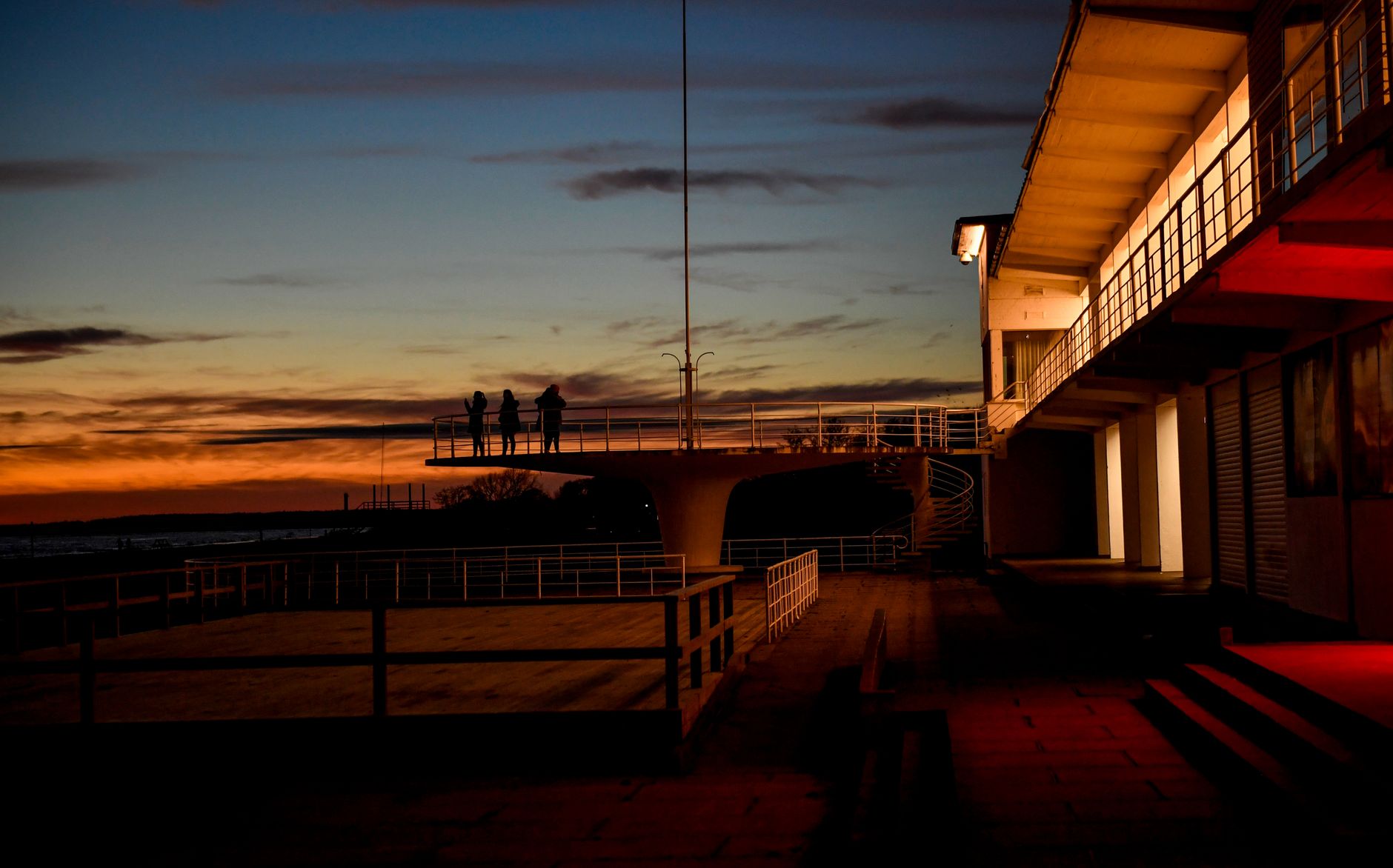
stays
Pärnu
Estonia's summer capital: a kilometre of shallow sand, century-old mud baths, and a wooden old town you can walk in twenty minutes.
Stays in Pärnu ↗
965 stays
Tallinn
A complete medieval walled town with a start-up city bolted on: cobbles, bastions, Kalamaja's wooden streets and Telliskivi's bars.
Stays in Tallinn ↗Doing good is the business: every booking through Estonia Destinations funds one verified tonne of carbon removal — same room, same price, no markup.
Search stays